

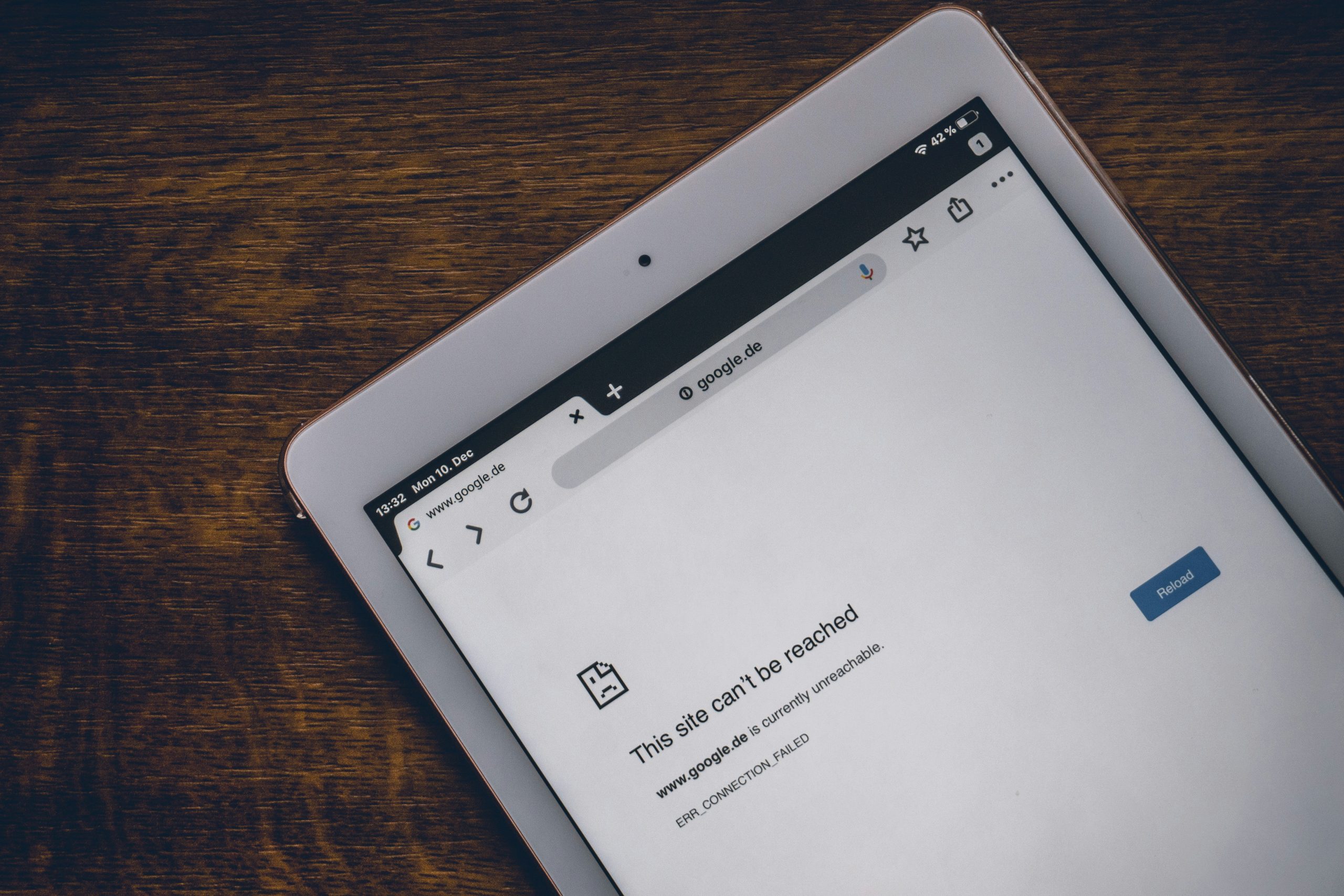
A friend recently told me she’d begun limiting her teenage son’s phone time, not as punishment, but as a gentle recalibration. Predictably, the first few days were rough. There were frustrations, complaints, and the restless pacing familiar to anyone who has tried to separate a young person from their device.
But then something unexpected happened.
Within a week, she found him curled up with a book. Not because he had to, but because he genuinely wanted to read. Soon he was finishing books, seeking out new stories, and gravitating toward quiet corners with a novel in hand, even when his fully charged phone sat beside him.
“He said he’s been noticing things,” she told me. “How the light moves through the trees. How much more real everything feels.”
He began spending more time outdoors. He lingered at dinners, engaging instead of sinking into the screen-glazed half-presence we’ve all come to normalise. He seemed more grounded, more here.
And it struck me that this happened in December, a month built around connection, ritual, and reflection. Yet so often, we enter this season fractured, pulled between the world in front of us and the glowing rectangle in our pocket.
The Numbers We Can’t Ignore
The global scale of social media addiction is staggering. As of 2025, approximately 210 million people worldwide struggle with addiction to social media and the internet.¹ In the United States alone, 10% of the population (over 33 million people) is affected.² Young adults aged 18–22 account for a disproportionate 40% of these cases.³
The research from Namibia adds important context. In a 2018 study, Iani de Kock found that while the vast majority of first-year university students used Facebook, about 8.1% experienced problems associated with compulsive use, mirroring global addiction rates (de Kock, 2018, p. 70). This indicates that the phenomenon is universal androoted not in culture, geography, or age, but in human neurobiology.
And the time we spend online is profound. The average person will devote 5.7 years of their life to social media.⁴ 5.7 that could have been spent reading, talking, resting, creating, or, as my friend’s son discovered, simply noticing the world.
Meanwhile, 46% of teens report that social media actually prevents them from connecting with friends in person.⁸ And teens who use social media for more than three hours a day show significantly higher risk for mental health challenges.⁶
The Overstimulation Crisis
The human brain is an extraordinary organ, but it wasn’t designed for the digital age. Our ancestors’ biggest concern was remembering where they left their hunting tools, where and how to find water and that lions are predators. It was certainly not managing notifications from seven different social media platforms while simultaneously trying to work, parent, and maintain some semblance of mental health.
De Kock’s study revealed a critical finding: when Facebook use becomes compulsive, it is strongly associated with sleep disruption, social withdrawal, and absenteeism (2018, p. 75). Compulsive use alone accounted for 27.4% of the variance in these academic-impairment symptoms (p. 82).
Notably, the issue wasn’t simply using Facebook. It was losing control of that use. When sleep suffers, when people withdraw socially, when daily functioning erodes, wellbeing declines.
Beyond the academic context, the neurobiological impact is clear. Each notification, like, or comment triggers dopamine release, activating reward pathways similar to those involved in gambling and substance use. Studies show that teens who spend more than five hours a day on social media have a significantly higher suicide risk.⁷ This is not hyperbole; it is a measurable public health concern.
And the paradox is heartbreaking: tools meant to “connect” us often leave us more isolated. When part of the mind is always monitoring the digital world, genuine presence becomes increasingly rare.
December: A Natural Reset Point
December invites us to slow down. The year winds to a close, workplaces ease their pace, families gather, and traditions draw us inward. This creates a rare cultural permission to step back from our devices.
It’s an ideal time to experiment with intentional disconnection.
Even brief breaks make a difference. Research from the American Psychological Association shows that just one week of reduced social media use can improve mental health as much as 8–12 weeks of psychotherapy.⁹
A separate two-week digital detox study found improvements across sleep quality, stress, perceived wellness, and real-life social connection.¹⁰
The benefits begin quickly and compound over time.
What Disconnection Looks Like in Practice
The story of my friend’s son mirrors what the research shows happens during digital withdrawal.
Week One: Restlessness
The first few days often feel uncomfortable, almost like a phantom limb. The hand reaches for the absent device. Many young people experience significant sleep disruption due to excessive online activity,¹¹ so recalibration feels jarring at first.
But boredom, though uncomfortable, becomes fertile ground. It is the unstructured space where creativity and curiosity re-emerge.
Week Two: Reawakening
This is when something shifts. Books appear. Outdoor time increases. Interests long buried beneath the scroll resurface.
De Kock’s research indicates that younger students are more vulnerable to impairment, while older students tend to use social media more intentionally (2018, p. 76). This underscores that intentionality, not abstinence, is key to avoiding negative outcomes.
Sleep improves. Mood stabilises. Attention recalibrates.
Week Three: Integration
By week three, the detox becomes a new normal. One study found that people who limited social media to 30 minutes a day for two weeks continued to use their phones less even after the detox ended, with ongoing improvements in sleep.¹²
De Kock similarly found that when Facebook use became intentional rather than compulsive, negative impacts on academic performance and life satisfaction disappeared (2018, p. 83).
It is not about removing technology.
It is about reclaiming agency.
The Return of Presence
“He’s noticing things,” my friend said. Such a simple sentence that captures the core of this entire conversation.
Reducing social media consumption doesn’t just ease anxiety¹³; it restores our capacity to experience life. Coffee tastes richer. Conversations deepen. Moments regain their weight and texture. The world stops being a backdrop for content and becomes a place to inhabit.
De Kock’s study found that life satisfaction wasn’t determined by time spent online, but by whether online use displaced essential real-life activities like sleep and social engagement (2018, p. 74).
Presence, not productivity or performance, is the real determinant of wellbeing.
And December offers endless moments that deserve our attention.
A Practical December Challenge
You don’t need to delete every app or abandon your phone entirely. Small, intentional shifts can have enormous impact.
Try one of these:
1. Phone-Free Meals
Leave devices in another room. Watch how conversation changes.
2. No Phone for the First Hour of the Morning
Protect your nervous system before the digital world rushes in.
3. Screen-Free Hour Before Bed
Research strongly recommends unplugging at least one hour before sleep.¹⁶
4. A Weekly Social Media Sabbath
One day offline each week can reset your nervous system.
And remember:
You can’t simply remove a habit; you must replace it.
Reading, walking, cooking, journaling, talking, resting. Make sure to fill the space with something nourishing.
What We’re Actually Disconnecting From
When we disconnect, we are stepping away from:
- comparison culture
- information overload
- performative living
- curated reality
- fractured attention
And stepping toward:
- presence
- authenticity
- depth
- creativity
- connection
Teen suicide rates have risen alongside social media use.¹⁸ Social platforms are engineered to be more addictive than cigarettes or alcohol.¹⁹ These are not trivial concerns. They are the quiet emergencies of our time.
What My Friend’s Son Really Found
A month into the experiment, my friend told me:
“He seems happier. He actually laughs more. He listens. He sleeps.”
He still uses his phone, but with intention rather than compulsion. His grades improved. His mood lifted. He feels more alive in his own life.
The research reflects this: when online behaviors become intentional, negative outcomes vanish (de Kock, 2018, p. 83).
This December, Give Yourself the Gift of Presence
We’re entering the season of presence, literally. Christmas celebrates the idea of being fully present, fully incarnate, fully here. Hanukkah celebrates light in darkness. Kwanzaa celebrates community and connection. New Year’s celebrates possibility and renewal.
What better time to experiment with actually being present?
You don’t have to delete all your apps. You don’t have to throw your phone in a drawer. You don’t have to become a digital hermit. Just… try being intentional. Try creating some space. Try noticing what happens when you’re not constantly stimulated by a screen.
Improved mental health, more time for other activities, better sleep, and increased in-person interactions are all potential benefits.20 But perhaps the greatest benefit is something harder to quantify: the recovery of your attention, your presence, your actual life.
Because here’s what I keep thinking about: my friend’s son didn’t just discover books when he put down his phone. He discovered that the world is worth noticing. That conversations are worth having. That experiences are worth experiencing, not just documenting. That boredom can lead to curiosity, which can lead to wonder, which can lead to joy.
He discovered what so many of us have forgotten: that the real life happening right in front of us, right now is infinitely more interesting than anything we’ll find on a screen.
This December, maybe we can all rediscover that truth. Maybe we can all spend a little less time performing our lives and a little more time actually living them. Maybe we can trade some of our screen time for face time, some of our scrolling for strolling and some of our posting for being present.
The world is still out there, waiting. The people we love are still right in front of us. The books are still on the shelves. The conversations are still worth having. The experiences are still worth experiencing.
We just have to put down our phones long enough to notice.
Look up.
The light is moving through the trees.
References
Primary Source
de Kock, I. (2018). Relating intensive and compulsive Facebook use with life satisfaction and academic performance amongst first year University of Namibia students [Master’s thesis, University of Namibia]. University of Namibia Repository.
Footnotes
- Exploding Topics. (2024). Social media addiction statistics. Retrieved from https://explodingtopics.com/blog/social-media-addiction-stats
- Exploding Topics. (2024). Social media addiction statistics. Retrieved from https://explodingtopics.com/blog/social-media-addiction-stats
- Exploding Topics. (2024). Social media addiction statistics. Retrieved from https://explodingtopics.com/blog/social-media-addiction-stats
- Exploding Topics. (2024). Social media addiction statistics. Retrieved from https://explodingtopics.com/blog/social-media-addiction-stats
- Pew Research Center. (2023). Teens and social media. Retrieved from https://www.pewresearch.org
- National Institute of Mental Health. (2023). Social media and teen mental health. Retrieved from https://www.nimh.nih.gov
- San Diego State University. (2019). Study on social media use and teen suicide risk. Retrieved from https://www.sdsu.edu
- Common Sense Media. (2023). Social media and teens report. Retrieved from https://www.commonsensemedia.org
- American Psychological Association. (2024). Digital detox study findings. Retrieved from https://www.apa.org
- Journal of Technology and Behavioral Science. (2024). Two-week social media detox study. Retrieved from academic database.
- Sleep Foundation. (2024). Social media and sleep disruption in young adults. Retrieved from https://www.sleepfoundation.org
- Digital Health Journal. (2024). Long-term effects of limited social media use. Retrieved from academic database.
- Mental Health America. (2024). Benefits of reducing social media consumption. Retrieved from https://www.mhanational.org
- Psychology Today. (2024). Real-world connections and wellbeing. Retrieved from https://www.psychologytoday.com
- Harvard Health Publishing. (2024). Optimal duration for digital detox. Retrieved from https://www.health.harvard.edu
- National Sleep Foundation. (2024). Screen time before bed recommendations. Retrieved from https://www.thensf.org
- Happiness Research Institute. (2015). The Facebook experiment. Retrieved from https://www.happinessresearchinstitute.com
- Centers for Disease Control and Prevention. (2023). Youth suicide rates and social media. Retrieved from https://www.cdc.gov
- Neuroscience Research. (2023). Addictive properties of social media platforms. Retrieved from academic database.
- Journal of Behavioral Addictions. (2024). Benefits of social media reduction. Retrieved from academic database.
– Originally written for Being Well Psychology’s December theme on Reconnect With the World That Lets You Grow, and shared here on Tightrope High
Leave a Reply